
Highlights
This article is available as a YouTube podcast.
Our reputation depends on how we communicate and how often we create media to accent our positives. What I learned through my six years in law enforcement and decades of law enforcement support was that mistakes by officers are incredibly easy to make. The best officers can inadvertently do the wrong thing. Most cops I worked with were good, decent people doing a job that protects all.
Yet it’s been my experience that it’s almost impossible to do the right thing with every interaction. To gain goodwill, we need the support of the political middle. We need to expand our influence beyond traditional supporters. We do this by building credibility. Credibility comes from telling both sides of any story. Credibility comes from good storytelling.
We collectively do good things daily to make people safer, so shouldn’t we be telling that story on every possible platform? Isn’t this more important than addressing emotional grievances-issues that are the heart of any social media platform?
CrimeinAmerica.Net-Chat GPT’s “Top 10 Sources for Crime in America” based on primary statistical sources with trusted secondary analysis.
100 out of a possible 100 score based on website trust, content, and links, Gridinsoft.com.
Crime in America.Net-“Trusted Crime Data, Made Clear.”
Quoted by The Associated Press (multiple times), USA Today, A&E Television, the nationally syndicated Armstrong Williams Television Show (30 times), ABC News, Inside Edition Television, Department of Justice documents, multiple US Supreme Court briefs, C-SPAN, the National Institute of Health, college and university online libraries, multiple books and journal articles, The Baltimore Sun, The Boston Herald, The Capital Gazette, MSN, AOL, Yahoo, The Daily Beast, The Huffington Post, JAMA, News Break, The National Institute of Corrections, The Office of Juvenile Justice And Delinquency Prevention, The Bureau of Justice Assistance, Gartner Consulting, The Maryland Crime Victims Resource Center, Law.Com, The Marshall Project, The Heritage Foundation via Congressional testimony, Law Enforcement Today, Law Officer.Com, Blue Magazine, Citizens Behind The Badge, Police 1, American Peace Officer, Corections.Com, Prison Legal News, The Hill (newspaper of Congress), the Journal of Offender Monitoring, Yomiuri Shimbun (Asia’s largest newspaper), LeFigaro (France’s oldest newspaper), Oxygen and allied publications, Forbes, Newsweek, The Economist, The Toronto Sun, Homeland Security Digital Library, The ABA Journal, The Daily Express (UK) The Harvard Political Review, The Millennial Source, The Federalist Society, Lifewire, The Beccaria Portal On Crime (Europe), The European Journal of Criminology, American Focus and many additional TV stations and publications.
Sign up for notice of new articles on the front page of this site.
A comprehensive overview of crime for recent years is available at Violent and Property Crime Rates In The U.S.
Opinion.
I read articles on the state of the American news industry daily. If you think that the justice system has problems, they pale in comparison to what’s happening within the media, with the loss of 30 thousand jobs and extremely low public opinion ratings of journalists.
I came across an article where a philanthropist stopped giving money to left-leaning news publications. He asked, “Do the organizations have real plans to grow their audiences outside of their most faithful followers?” If his funding wasn’t reaching more than the already converted, there was little point in continuing his efforts.
I believe that his question applies to those of us within law enforcement and the overall justice system regarding our outreach efforts; do we try to reach independents and those outside our usual supporters?
I read a variety of police and justice system social media daily, and where we do a good job with those who agree with us, do we do a credible job of bringing in people beyond our usual supporters?
35 Years Of Talking To The Public
I have 35 years of leading media and public relations for national and state criminal justice agencies, including working on the “McGruff Take A Bite Out Of Crime” national media campaign. I won a slew of awards for my proactive work using self-created social media, podcasts, radio, and television shows to promote the work of law enforcement and justice agencies. We traveled the country teaching others on new and unique ways of reaching the public.
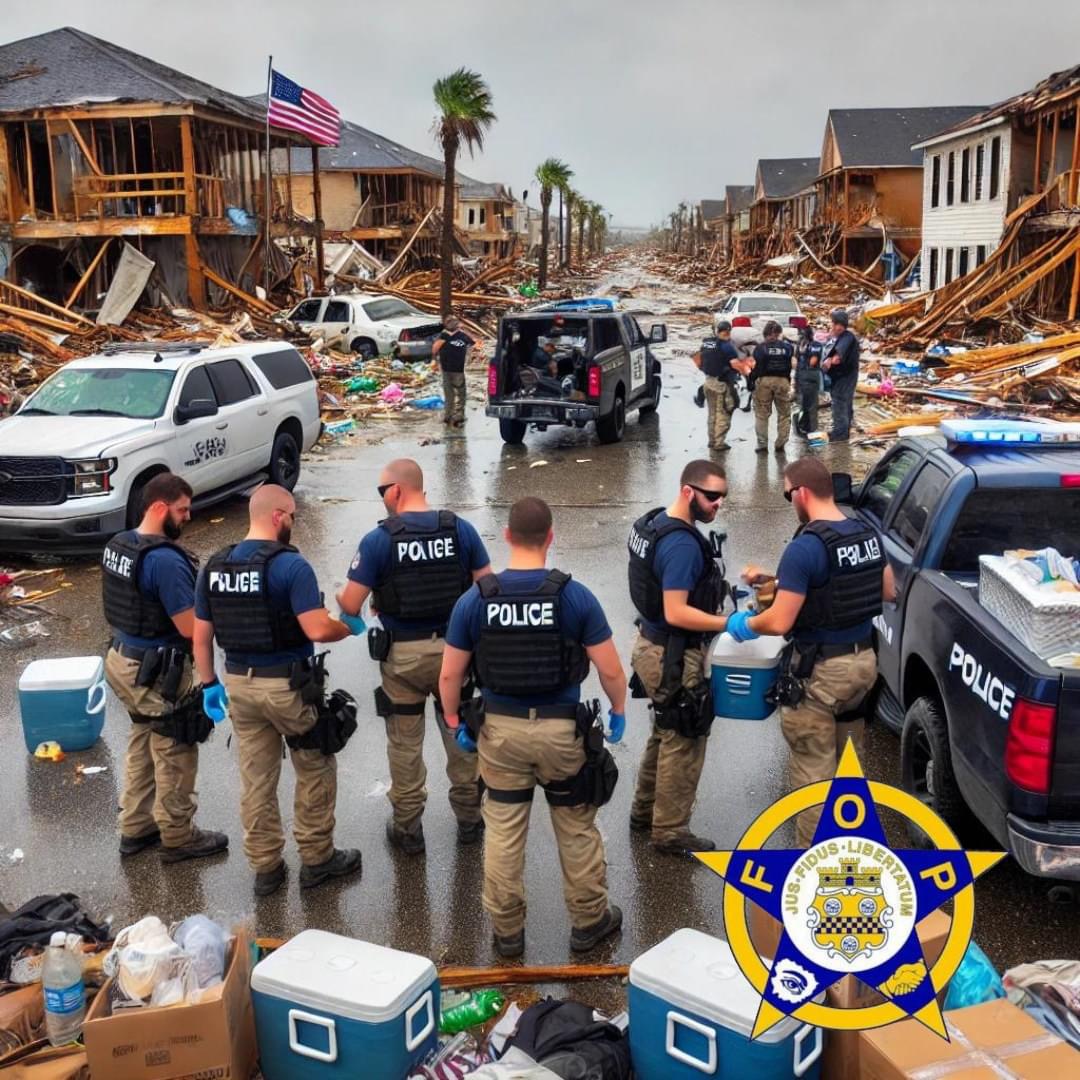
Every day, police officers are saving lives at accident scenes, finding lost children, or apprehending dangerous people. Do we go out of our way to publicize these events to the media and the larger public? Do we create our own media, making sure that the public is aware of all the good things we do?
I witnessed officers literally saving the lives of multiple victims at accident scenes using skills that were remarkable. Did they get publicity for this? No. Should they have? Yes.
We save lives daily. We protect the lives of the vulnerable. Corrections and parole and probation also have stories to tell that resonate favorably with the public.
People are interested in what we do and how we do it. It’s an opportunity if handled correctly.
How We Communicate
Law enforcement and justice social media publications understandably offer emotional accounts as to the wrongs committed against officers and other emotional issues that resonate with cops, correctional officers, and supporters.
Maybe we need to expand our emphasis to address topics beyond what resonates with us? True crime is exploding. Dozens of television shows seem to emphasize the interesting or dramatic aspects of the work we do (what our detractors call cop-a-granda).
There is obviously interest in what we do and how we do it. A great example of this philosophy is Heroes Behind The Badge that I advertise on the front page of CrimeInAmerica.Net when you click on an article. If you would like me to promote your site, please contact me with your RSS feed.
Social media strategists want creators to connect with readers on an emotional level, and I understand that. But we need to reach others beyond ourselves if we want more influence. Spending most of our time servicing the converted means we do not move forward; we reach those who are already committed.
I’m NOT suggesting that we leave our supporters behind. I’m simply suggesting that we expand our audience.
We need to reach the political middle, and we have the tools for doing that through aggressive use of social media, photos, podcasts, and self-created television and radio shows.
Interestingly, sheriffs throughout the country are aggressively doing this with powerful and effective media that gets tens (hundreds?) of thousands of views. As elected officials, their audience is everyone.
My bottom line? We have to go beyond reaching the converted and move to include the middle of America. We do this by building credibility. Credibility comes from telling both sides of any story. Credibility comes from good storytelling.
The Independants
A publisher of a police social media site said that most of his readers were conservative, so they fully intended to serve their needs. While I understand that philosophy, are we neglecting to influence others? If you get a considerable number of views daily, you are probably satisfied with your efforts. However, most have fairly small audiences.
Many Americans describe themselves as independents, not Democrats or Republicans. There are more independents than Republicans or Democrats. For example, a Jan 2026 Gallup poll (reported by AP News) indicated about 45% of U.S. adults identified as independents in 2025.
We need to reach them.
Per Pew: Americans have long been frustrated with the two major political parties. A sizable share – 37% – continue to say they wish there were more parties to choose from, according to a recent Pew Research Center survey of 10,357 U.S. adults.
Among adults ages 18 to 49, 44% say their views are described extremely or very well by the phrase, “I often wish there were more political parties to choose from.”
Democrats and Democratic-leaning independents are more likely than Republicans and GOP leaners to say they want more parties (46% vs. 29%).
My point? The middle wants more. Let’s give it to them regarding policing and the justice system.
Gallup’s Views of Policing Are Mostly Positive
Note that what follows measures two different things: honesty and ethical standards, and confidence in US institutions.
Gallup has gauged the public’s views of the honesty and ethical standards of a variety of occupations since 1976. The list changes from year to year to allow for the measurement of a larger number of professions over time. One new group, military veterans, was added this year in partnership with With Honor and is rated highly by 67% of Americans.
Seven of the 21 occupations measured in the Dec. 1-15, 2025, poll have reached new low points or tied their previous lows.
Pharmacists, high school teachers, clergy members and business executives are each two or three percentage points lower than the previous record lows.
Police officers, stockbrokers and telemarketers have returned to prior low points for each. Police officers’ rating has shifted the most in the past year, falling seven points for the honesty/ethics rating (emphasis added).
It’s good that we understand how the public sees us. Just keep in mind that Americans seem inclined to rate most American institutions poorly, and rankings change year to year.
Per a prior report from Gallup (see my article on the topic), the average confidence in US institutions remains historically low, at 28%. But for law enforcement, Americans’ confidence in the police increased eight percentage points over the past year to 51%, the largest year-over-year change in public perceptions of 17 major U.S. institutions measured in Gallup’s annual update.
Faith in the police fell in 2020 to 48% after George Floyd was murdered while in police custody. After increasing to 51% in 2021, confidence in the police dropped again in 2022 and dipped further to a record low of 43%.
Over the past year, confidence in the police has risen among most major demographic subgroups of Americans, particularly three that previously expressed lower levels of confidence in the police: those aged 18 to 34, people of color, and political independents.
There were 17 American institutions rated, and the police came in third. Considering everything law enforcement has been through in recent years, that’s a remarkable accomplishment.
The lesson? As to confidence in institutions, we can reach the middle.
Be The People National Campaign
Associated Press: As the official celebrations of the 250th anniversary of the signing of the Declaration of Independence culminate on July 4, a well-financed, privately funded initiative will kick off to try to connect hundreds of millions of Americans with efforts to solve local problems.
The “Be The People” campaign aspires to change the perception that the U.S. is hopelessly divided and that individuals have little power to overcome problems like poverty, addiction, violence and stalled economic mobility. It also wants to move people take action to solve those problems.
Funded by a mix of 50 philanthropic foundations and individual donors, Be The People builds on research that indicates many people want to contribute to their communities but don’t know how. The initiative is targeting more than $200 million for its first year.
The Technology Isn’t Complicated
Throughout my years of encouraging justice and other agencies to promote themselves, the technology (and the simplicity of that technology) has improved immensely. In most cases, all you need is a smartphone with decent lighting.
Video and audio editing tools have greatly improved. Your local community college can assist with the creation of television and radio shows. Knowledgeable people will volunteer their skills. Podcasts using audio and photos/video are hosted for free on YouTube and multiple other sites. The ability to capture audio on a smartphone is more than possible, but audio recorders with great mics are not expensive. AI-created audio for your podcasts is available from Notebook LM. You just need to submit an article or script. See how this works for me by visiting my YouTube site.
Police officers at accident scenes, or where a lost child was found, or where a dangerous person was apprehended, can record photos or video. Yes, there are legalities to observe (i.e., blurring the faces of children and victims of crime). Whatever is created should be run through your public information office to make sure it’s both accurate and releasable. Asking people to sign a permission slip for using their image or voice is a good idea.
Conclusions
President Trump, in a two-hour address to the media regarding the first year of his second term, admitted that his administration was not doing a good job accenting his positives.
He has Republicans and conservatives, but to win the midterms, he needs independents.
The President’s concern for promotion and regaining the middle applies to the rest of us. Many will say that if Trump found a cure for cancer or dramatically improved the economy, the media and detractors would still find something to complain and protest about. In a similar light, many within law enforcement believe that the public relations cards are stacked against them, a belief that is not supported by polling data.
Per polls, most Americans, regardless of demographics, support law enforcement and want cops in their communities. Yes, there are differences based on political affiliation, race, and age, but the statement above remains true.
Our reputation and effectiveness depend on how we communicate and how often we create media to accent our positives. What I learned through my six years in law enforcement and decades of law enforcement support was that mistakes by officers are incredibly easy to make. The best officers can inadvertently do the wrong thing. Most cops I worked with were good, decent people doing a job that protects all.
It’s almost impossible to do the right thing every time within tens of millions of public interactions yearly, which is why we need to promote our people whenever possible. In public relations, it’s called keeping a positive PR balance while understanding that things can deteriorate quickly.
If it’s true that we collectively do good things daily to make people safer, then shouldn’t we be telling that story on every possible platform? Isn’t this more important than addressing emotional grievances or issues that are the heart of any social media site?
Isn’t the effort to objectively tell both sides of any story (to build credibility) effective in persuading the political middle and getting them to acknowledge that what we do is in their (and their community’s) best interest?
The middle isn’t influenced by promotion only. The middle is influenced by a fair and balanced appraisal of issues. I get to influence reporters by being fair. I get to influence media articles by being balanced. This site has a 100 out of a possible 100 score based on website content, links, and trust, per Gridinsoft.com. I interact with national media and television shows frequently.
Do we need to be smarter in our social media and public communications? Yes. Do we need to reach the political middle? Yes.
I’m not suggesting that we leave our supporters behind. I’m suggesting that we move forward with an expanded audience.
Privacy Policy
We do not collect your personal information. See our privacy policy at “About This Site.”
See More
See more articles on crime and justice at Crime in America.
Most Dangerous Cities/States/Countries at Most Dangerous Cities.
US Crime Rates at Nationwide Crime Rates.
National Offender Recidivism Rates at Offender Recidivism.
The Crime in America.Net RSS feed (https://crimeinamerica.net/?feed=rss2) provides subscribers with a means to stay informed about the latest news, publications, and other announcements from the site.
One Reply to “Winning the Middle: Improved Media Strategies for Police And Justice Agencies”